 |
 |


Aiming to transition laser-ignited inertial fusion from experimental to industrial stage.

New device combines a swept-source laser with a single-photon detector.
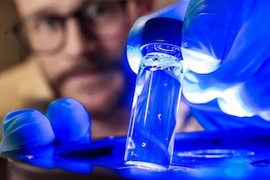
Avoiding UV wavelengths allows electrodes to be created on fragile living surfaces.

Researchers have “broken barriers” in attoscience with the shortest light pulse ever created.
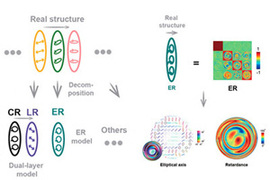
Elliptical retarder model improves polarization analysis for material design and biomedical imaging.
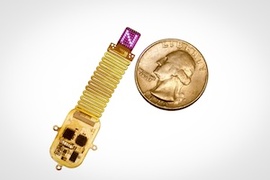
Patterned bursts of light could help rehabilitation and pain relief.
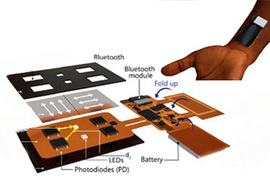
Brown University’s approach addresses PPG signal quality at level of light-tissue interaction.

2D ferroelectric material “CIPS” can direct blue and ultraviolet light – notably for chip-making applications.
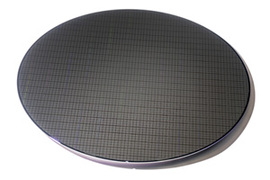
Enables scalable precision biosensing applications in life sciences and healthcare.
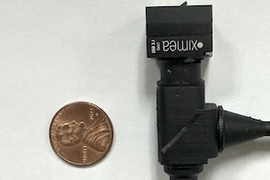
Miniaturized MiniVolt device catches voltage spikes in live animals for better view of brain activity.
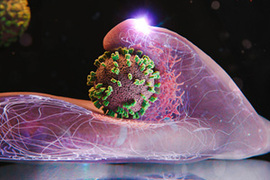
Combined AFM and fluorescence approach enables live and high-resolution imaging.
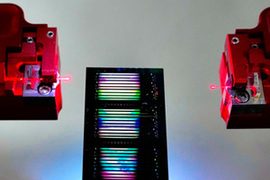
Findings pave the way for next-generation GPS, quantum machines and communications technology.
| © 2026 SPIE Europe |
|


