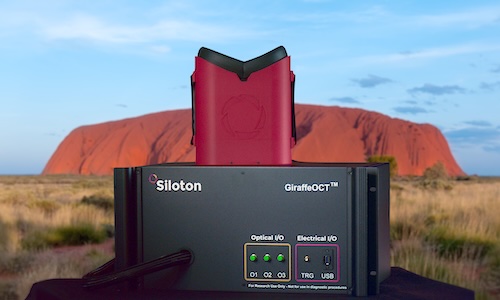


Use of novel nanorods keeps laser exposure within safe limits.
Canadian group presents polarization method to diagnose human tissue condition subtypes.
But the German optics giant is optimistic of a return to growth this year as demand in key market sector recovers.
III-V germanium module at 34.2%, and III-V silicon module at 31.3% are “world beating”.
Livermore company was co-founded by National Ignition Facility research leaders Annie Kritcher and Mike Dunne.
Liquid biopsy technique combines IR spectroscopy and AI for rapid analysis of samples.
| Danish group’s nanolaser could halve computer energy use A step towards future digital communications by all-optical microchips. |
| Infleqtion and NASA taking quantum gravity sensor into space With $20 M funding so far, Quantum Gravity Gradiometer Pathfinder Mission is intended to “advance U.S. space sensing”. |
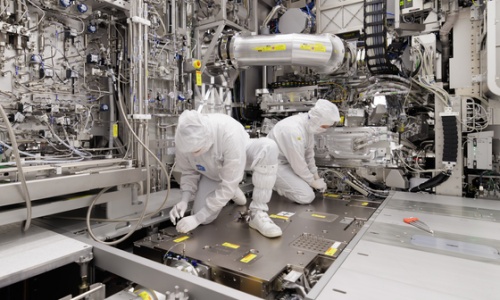
| imec opens NanoIC pilot line to drive innovation in sub-2 nm SoC Supporting aims of EU’s Chips Act and located in a 2,000 sqm cleanroom expansion at Leuven. |
| Shanghai group develops heatproof fiber microphone to monitor power networks Immune to heat and high voltage, optical sensor can spot problems inside transformers. |
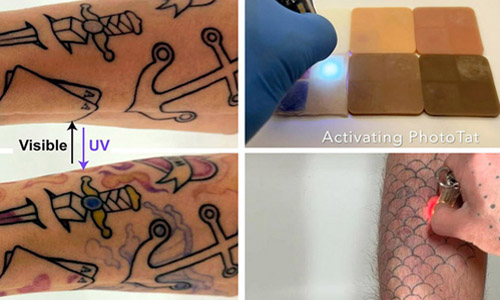
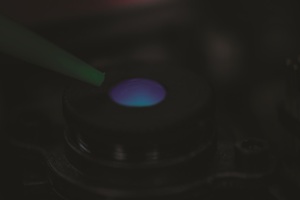
| Japan group achieves dual-mode visible light generation from UV and NIR sources Researchers from three universities develop organic crystal that converts “invisible” light into red and green beams. |
| Laser-written glass chip advances quantum communication New photonic platform combines low loss, polarization independence, and full tunability. |
Hamamatsu Photonics Europe GmbH
Wasatch Photonics
Voltage Multipliers, Inc
![]() | Future pathways to quantum cascade laser technologies 05 Feb Hamamatsu Photonics Europe Quantum cascade lasers (QCLs) enable highly selective mid-infrared gas detection for CH₄, CO₂, and H₂S, minimizing interference and boosting accuracy. Advances in QCL technology promise cost-effective, compact solutions for environmental monitoring, industrial safety, and healthcare diagnostics, driving next-generation gas analysis applications worldwide. |
![]() | Surface Quality Control for Maximizing LIDT in High-PowerLaserOptics 06 Oct 2025 Optoman in collaboration with Dioptic In high-power laser systems, the optical components' resilience to laser-induced damage directly determines performance, reliability, and service life. Even minor surface or subsurface imperfections can severely compromise the laser-induced damage threshold (LIDT), introducing failure points that limit system capability. |
![]() | Choosing the best spectrometer for NIR OCT 02 Apr 2025 Wasatch Photonics Near infrared optical coherence tomography has traditionally been limited to imaging depths of just a few millimeters, but with our expanded line of OCT spectrometers, up to 12 mm is possible. In this tech note, we explore and compare three different drop-in spectrometer models designed to serve a wide range of resolution, depth, and size requirements in NIR OCT imaging. |
![]() | Identifying Optical Materials with Precision Accuracy 04 Mar 2025 Knight Optical Precision accuracy is a critical necessity with any optical component. Rigorous testing to ensure strict compliance with given requirements will always be essential; it is a vitally important demand within any industry sector. Dimensional, surface profiling and optical performance testing are significant aspects of this process, but an additional layer of assurance and quality can be achieved with the use of material verification, employing methods such as refractive index, density testing and transmission measurement. This White Paper explores advanced techniques for precise optical material verification, overcoming the limitations of traditional testing methods. |
| © 2026 SPIE Europe |
|