



Diffraqtion aims high with $10M for 'quantum' camera platform
Venture support for spin-out from MIT and the University of Maryland follows selection by NASA for orbital debris tracking project.
01 September 2026

Diffraqtion, a startup company in Somerville, Massachusetts, working on novel camera technology, says it has raised $10 million in venture funding.
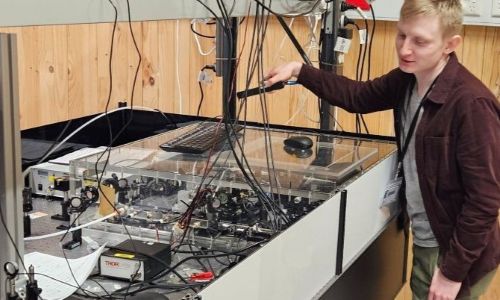
Described as a “quantum” camera, that technology has its origins at Saikat Guha’s photonic quantum systems research group at the University of Maryland, and its potential in space exploration and defense has already attracted attention from the likes of NASA and DARPA.
Key advantages are said to include up to 20 times higher resolution and 1000 times faster processing than conventional imaging hardware, enabling ultra-high-resolution imaging systems to be built at a fraction of the cost of today’s satellites and ground-based telescopes.
Founded by Guha, company CEO Johannes Galatsanos, and CTO Christine Wang, the company raised $4.2 million in pre-seed funding earlier this year, and has now won backing from the venture wings of Lockheed Martin and Sumitomo Corporation.
Beating the diffraction limit
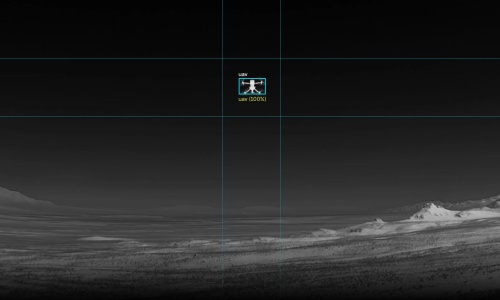
Since that initial fundraising effort, Diffraqtion has completed on-sky demonstrations at a partner observatory, showing that its cameras can distinguish closely spaced objects, while NASA has selected the firm for an SBIR Phase I program in orbital debris tracking. Diffraqtion also won NASA’s $100,000 “Space to Soil Challenge” for adaptive sensing and onboard processing (see the winning pitch below), while the US Defense Advanced Research Projects Agency (DARPA) has selected it for a Phase II SBIR effort following a demonstration of sub-diffraction-limit imaging with collaborators at the University of Arizona.
“Diffraqtion's quantum cameras resolve detail below the diffraction limit, the hard resolution floor that the aperture of a lens imposes on every conventional optical system,” explains the startup.
“By sorting incoming light by its shape rather than its brightness, they measure information conventional cameras discard, reducing the aperture and compute needed to classify far-away objects.”
Diffaqtion’s method is said to be passive, drawing on quantum estimation theory rather than quantum computing, and therefore without the need to use qubits or cryogenics.
The new funding takes the technology into its first fielded camera, with flight heritage planned through a hosted payload on a partner spacecraft.
New engineering chief Peter Kazlas
To lead the effort, the startup has appointed Peter Kazlas as its new head of engineering. Kazlas brings 25 years of experience taking novel optics from the laboratory to volume production, including stints at E Ink and QD Vision, the quantum-dot displays pioneer subsequently acquired by Samsung.
“For as long as cameras have existed, seeing farther has meant building bigger optics,” said CEO Galatsanos. “Our cameras break that paradigm, delivering better mission capability at a fraction of the aperture, size, and cost. Now we're building our first fielded camera and preparing for operational engagements in space domain awareness and reconnaissance.”
Chris Moran, VP and general manager at Lockheed Martin Ventures, added: “What excites us about Diffraqtion is how they're applying quantum-enabled imaging to extract more information from light and improve target detection and classification with smaller, more efficient sensing systems.
“We invest in technologies with the potential to shape future mission capabilities, and this team's rapid progress from laboratory development toward flight demonstration is particularly promising.”
Ross Leav, senior VP at Sumitomo-owned Presidio Ventures, commented: “What drew us to Diffraqtion is that the same physics advantage applies whether the camera is observing the sky or the earth, or guiding a physical system.
“We see significant opportunity to bring this capability to industrial and commercial markets globally, and we're excited to support the team as they move into deployment.”



Tufts University observes Herpes virus reshaping neurons
August 26 2026