



Siloton secures £8.4 million to translate GiraffeOCT into clinics
Funds could shave two years off development of quantum photonic integrated circuit-based OCT.
15 October 2026

Siloton has announced it will receive £8.4 million over two years from Innovate UK, part of UK Research and Innovation (UKRI), to support development of Siloton's OCT technology.
The contract will accelerate the development of its groundbreaking handheld eye imaging system, said the company, technology designed to make the detection and monitoring of retinal diseases more accessible to patients.
Siloton intends to put the funding towards design of the in-clinic and at-home versions of its GiraffeOCT optical coherence tomography device, as well as complete trials on both systems. The start-up expects the Innovate UK support could cut the development process by up to two years.
"Many early-stage companies struggle to get beyond the well-known ‘valley of death’ in developing new products, particularly in healthcare," commented Siloton CEO Alasdair Price. "But this will support us through that crucial phase, bringing the Siloton system closer to being in patients' hands and building a technology that can be used worldwide."
The company announced it will work with Sunderland Specialist Eye Hospital on clinical trials over the course of the contract for its in-clinic device, giving patients across the UK's North East and North Cumbria areas access to the technology during its development. York Health Economics Consortium will also use this data to refine their cost-saving-estimates for Britain's NHS healthcare system.
Ensuring UK patients access the same innovations as other countries
Siloton's chip-based OCT technology has the potential to be more compact and robust than a traditional platform, making it easier to examine patients for signs of age-related macular degeneration (AMD) and other retinal diseases.
Earlier in 2026 the company announced a collaboration with UCL Great Ormond Street Institute of Child Health for development of a OCT platform designed specifically to monitor children's eyes, using the advantages of photonic-chip architecture to adapt the platform physically and interactively so it can be used by children.
Siloton's GiraffeOCT platform is designed as an easy-to-use, binocular-style system that makes the process more affordable and accessible whether in a clinic or at home, compressing a tabletop’s worth of heavy, expensive and fragile components onto a chip smaller than a £1 coin.
When Siloton took the first image of a human retina using its technology in 2024, it indicated that its research had been based around three patents. These related to ways to compensate for natural variation in the distance of patient retinas from the chip; the internal structure of the optics used to ensure optimal chip performance; and an optical arrangement for imaging both eyes without doubling the number of components.
"The NHS needs new technologies and new ways of working, and it needs them quickly," said Alasdair Price. "This contract is a first step toward streamlining the process and ensuring patients in the UK get access to the same innovations as other countries, as soon as they are deployed rather than years after approval."
Siloton OCT photonic chip takes sub-surface image of human retina
November 06 2024
Siloton develops specialized OCT for pediatric eye tests
September 23 2026
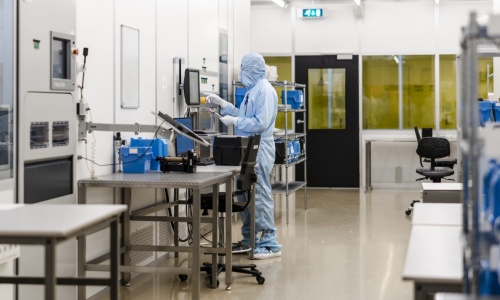
Xiver picks up €28M debt finance to aid photonic chip production
October 15 2026

U.S. Army Research Office awards $19.2 million to Florida team
October 14 2026
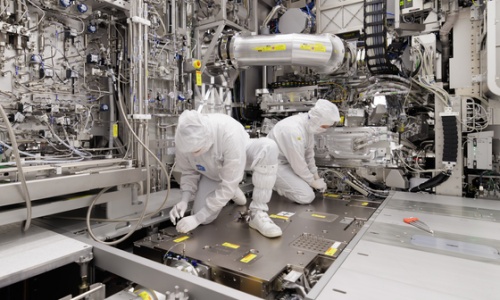
ASML looks to add more capacity as chip boom continues
October 14 2026

UK’s Salience Labs adds $125M series B
October 14 2026

Francis Halzen awarded Nobel Prize in Physics 2026
October 12 2026