



SPIE announces 59 new Fellows of the Society
Honorees recognized for their significant contributions to optics and photonics.
06 August 2026
 SPIE has welcomed 59 new Fellows of the Society. They have been recognized for their exceptional contributions to optics and photonics through technical achievements, and their substantial service to the optics and photonics community and SPIE.
Each year, a select group of SPIE Members are chosen from nominations made by SPIE Members and Fellows. Recommendations and evaluations are made based on criteria such as excellence in publications or product development, serving on SPIE committees or editorial boards, and promoting science education or influencing policy. Of the more than 25,000 SPIE Members, less than 1,950 have been chosen to be Fellow.
“I would like to congratulate the new 2026 SPIE Fellows inductees. Every year the cohorts highlight exemplary work in the fields of optics and photonics, and this year was no exception,” says Fellows Committee Chair and Clemson University Professor Oliver Myers. “All of the inductees continue to amaze the reviewers with their technical and community leadership. We look forward to greater accomplishments from all the current and future Fellows.”
New Fellows are acknowledged during the SPIE symposium of their choice throughout the year. View the complete list of all SPIE Fellows, nomination criteria, and the SPIE Fellows nomination form.
Newest SPIE Fellows
- Ofer Adan, Applied Materials Ltd., Israel
- Kamran Avanaki, University of Illinois - Chicago, United States
- Pierre-Alexandre Blanche, Amazon, United States
- Claudio Bruschini, Ecole Polytechnique Fédérale de Lausanne, Switzerland
- Chin-Tu Chen, The University of Chicago, United States
- Hongqiang Chen, GE Aerospace Research, United States
- Qian Chen, Nanjing University of Science and Technology, China
- Wallace Chik-Ho Choy, The University of Hong Kong, Hong Kong
- Abdulhakem Elezzabi, University of Alberta, Canada
- Noel Chris Giebink, University of Michigan, United States
- Eric Goodwin, Nikon Research Corporation of America, United States
- Harsha Grunes, Intel Corp., United States
- Tian Gu, MIT, United States
- David Haefner, C5ISR, United States
- Tayyaba Hasan, Wellman Center for Photomedicine, Massachusetts General Hospital, United States
- Gerd Häusler, University of Erlangen-Nürnberg, Germany
- Clifford Headley, Leonardo Electronics US Inc., United States
- Eric Herman, Keysight Technologies Inc., United States
- Shengxi Huang, Rice University, United States
- Deep Jariwala, University of Pennsylvania, United States
- Ebrahim Karimi, University of Ottawa, Canada
- Brendan Kennedy, Harry Perkins Institute of Medical Research and University of Western Australia, Australia
- Dangyuan Lei, City University of Hong Kong, Hong Kong
- Paul Leisher, University of Central Florida, United States
- Thierry Lepine, Institut d’Optique, France
- Beiwen Li, University of Georgia, United States
- Jiawen Li, University of Adelaide, Australia
- Wei Li, Changchun Institute of Optics, Fine Mechanics and Physics, China
- J. Alexander Liddle, Canon Nanotechnologies Inc., United States
- Cristian Linte, Rochester Institute of Technology, United States
- Chengbo Liu, Shenzhen Institute of Advanced Technology, China
- Sebastian Lourdudoss, Royal Institute of Technology, Sweden
- Yanhua Luo, Shanghai University, China
- Yuansheng Ma, Siemens EDA, United States
- Olivier Martin, Ecole Polytechnique Fédérale de Lausanne, Switzerland
- Muhammad Qasim Mehmood, Information Technology University, Pakistan
- Julius Muschaweck, JMO Illumination Optics, Germany
- Jeffrey W. Nicholson, Lightera LLC, United States
- Thomas O'Sullivan, University of Notre Dame, United States
- Wolfgang Parak, Hamburg University, Germany
- Pascal Picart, Le Mans Université, France
- Anne-Sophie Poulin-Girard, ABB Analytical Measurement, Canada
- Tony Ragucci, Teledyne Scientific, United States
- Andrew Rakich, KiwiStar Optics, New Zealand
- Aaswath Raman, University of California, Los Angeles, United States
- Changhui Rao, Institute of Optics and Electronics, Chinese Academy of Sciences, China
- Junsuk Rho, POSTECH, Korea
- Thomas Scheruebl, Carl Zeiss SMT Gmbh, Germany
- Ronian Siew, inopticalsolutions, Canada
- Swaminathan (Sam) Sivakumar, Intel, United States
- Linda Thomas, Naval Research Lab, United States
- Miriam Serena Vitiello, National Research Council, Nanoscience Institute, Italy
- Alexis Vogt, Monroe Community College, United States
- Wei Wang, Heriot-Watt University, United Kingdom
- Hai Xiao, Clemson University, United States
- Ge Yang, North Carolina State University, United States
- Tzuyang Yu, University of Massachusetts Lowell, United States
- Haishan Zeng, BC Cancer Research Institute and University of British Columbia, Canada
- Guoan Zheng, University of Connecticut, United States
John Kiel Scholarship recipient Peigang Chen advances quantum photonics
Peigang Chen’s guiding principles could be summed up in two words: curiosity and belonging. The 2025 recipient of the $10,000 SPIE John Kiel Scholarship, which recognizes a student’s potential for long-term contribution to the fields of optics and optical engineering, first became enamored with light as a child when he watched sunlight being captured through the lens of his father’s camera.
Decades later, Chen is putting his fascination with light toward his studies at Purdue University, where he is a PhD candidate studying plasmonics and conducting groundbreaking research in quantum photonics.
 As president of Purdue’s SPIE Student Chapter, Chen organizes seminars and networking events to promote knowledge-sharing in photonics. Committed to advancing quantum technologies, he aims to bridge fundamental research with practical applications that will shape the future of quantum computing and sensing. An active SPIE Student Member, he avidly takes advantage of what SPIE offers, attending SPIE conferences and utilizing the SPIE Digital Library, which he calls an “essential resource for accessing high-quality publications and exploring emerging trends in optics and photonics.”
Encouragement
Chen is also encouraging younger generations of the photonics-curious to get involved. “Optics and photonics let you control light itself. It’s something that powers the internet, medical imaging, and even quantum technologies,” he said. “This field gives you both deep science and real-world impact.”
By receiving the John Kiel Scholarship, Chen hopes to accelerate his quantum emitter research and expand a mentorship program that connects undergraduates with global photonics startups. Ultimately, his sights are set on becoming a professor, mentoring underrepresented students and ensuring they feel welcome in the community. He hopes to provide hands-on research opportunities, honest guidance, and visible support so students can see that they truly belong and can succeed in science.
“Science is not about being a genius. It’s about curiosity, persistence, and learning from failure,” Chen said. “If you’re willing to ask questions and keep going, you absolutely belong.”
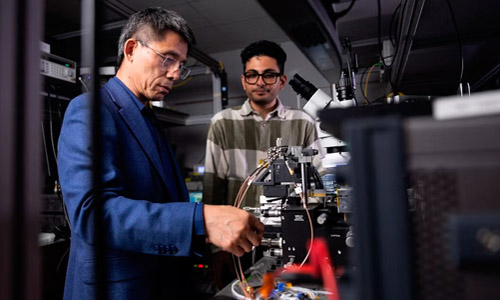
U.S. Army Research Office awards $19.2 million to Florida team
October 14 2026
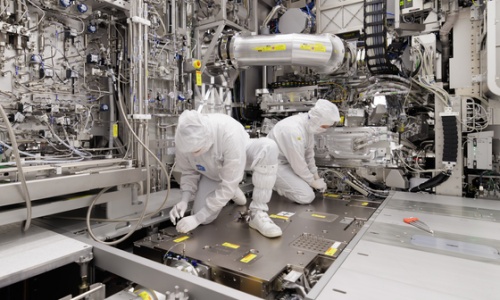
ASML looks to add more capacity as chip boom continues
October 14 2026

UK’s Salience Labs adds $125M series B
October 14 2026
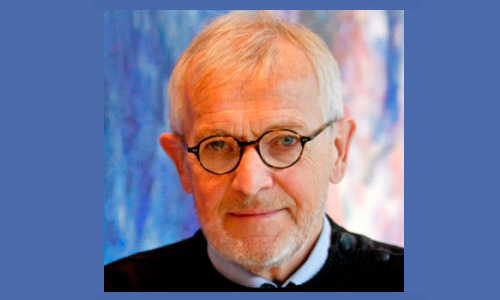
Francis Halzen awarded Nobel Prize in Physics 2026
October 12 2026